The Simca Aronde 1300 or 90A, the Flash-engine turning point
When the Aronde 1300 arrived for the 1956 model year, Simca was not merely refreshing its best-known model. The brand gave it a fuller engine, a stronger appearance and a much broader presence in the range.
Between the early Aronde 9 and the later P60, the 1300 often represents the most balanced moment in the whole line.
Key facts. 1956 model year, 1,290 cc Flash engine, "ligne Oceane", Elysée and Grand Large saloons, utility versions and Monthlery series: the Aronde 1300 marks the family's widest expansion.
1956, a more complete Aronde
With the Aronde 1300, Simca developed a model that was already selling well. The most visible change was not the only important one. The 1,290 cc Flash engine brought a little more strength and flexibility, enough to keep the car aligned with a market that was becoming more demanding.
The designation 90A, often found in documentation, belongs to this transition. The Aronde remained the same family, but it entered a more mature and better equipped stage.
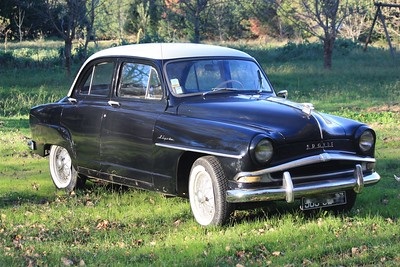
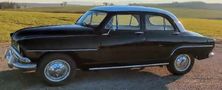
A 1957 Aronde 1300 Grand Large.
The "ligne Oceane" changes the shape
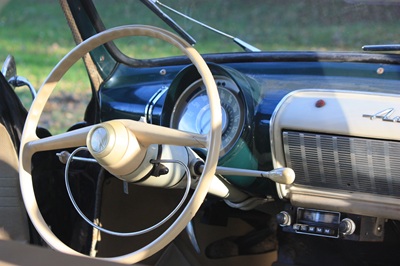
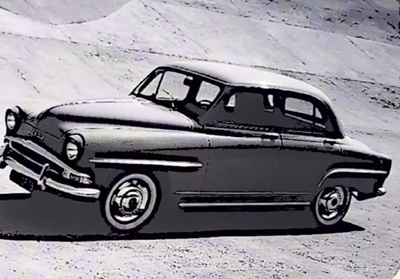
The 1956 model year revised the presentation deeply. The grille became sharper, the rear took on a measured American influence, and the dashboard and cabin furniture were redesigned. The result was a better-dressed and more expressive car without fully breaking with the balance of the first Arondes.
This stylistic move matters because it shows how closely Simca followed contemporary taste while keeping the format and purpose of a family car.
The redesigned dashboard accompanied the new presentation of the Aronde 1300.
A very broad range, from everyday use to style car
The Aronde 1300 existed as De Luxe and Elysée saloons, the Grand Large coach, coupes, cabriolets and a whole series of utility bodies. Few French cars in this class then offered such breadth. Simca used its technical basis to the full, which allowed it to reach families, tradespeople and buyers who simply wanted a more elegant line.
That abundance of body styles also explains the model's place in collections today. Depending on the version, the car does not feel exactly the same, even though the family resemblance is immediate.
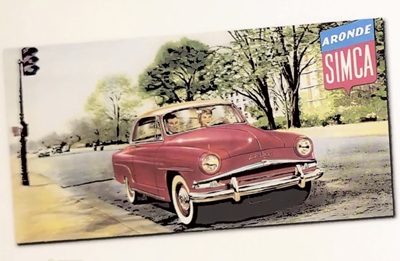
The Monthlery version turned the Montlhery record story into a production model.
Montlhery, Monthlery and better-equipped versions
The endurance records set at Montlhery in the spring of 1957 gave Simca a powerful publicity argument. The brand used them to reinforce the Aronde's reputation for toughness and to launch Monthlery versions that placed more emphasis on performance and equipment.
In the same spirit, better-finished versions such as the Elysée-Matignon tried to pull the range upward. All this shows a company that no longer wanted only to sell a good popular car, but to build a real hierarchy inside the range.
The best bridge between the Simca 9 and the P60
The Aronde 1300 kept the sound logic of the early cars while clearly preparing the P60. It toughened the style a little, enriched the trim and modernised the engine without yet moving into the stronger visual excesses of the late 1950s.
That is why it remains central in the line's history. It is not the beginning and not the last transformation, but it is very likely the most complete phase of the family.
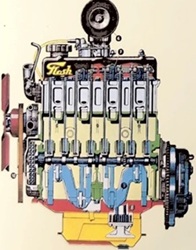
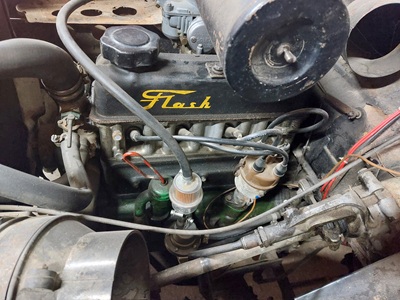
The Flash engine is often presented as the great mechanical turning point of the Aronde 1300. That is not wrong, but it needs to be read with measure: Simca is seeking less a rupture than the right adjustment to the mid-1950s market.
The Flash is not an isolated revolution; it accompanies a whole phase of the model’s maturity.
A powertrain more in step with the market
The Aronde already sells well before 1956. Yet competition moves on and expectations rise. The Flash engine brings enough flexibility and reach to keep the car at its commercial level.
The progress is therefore real, but it belongs to continuity. Simca improves what needs improving without denying the Aronde logic.
The Flash as a marker of maturity
Once the Flash appears, the Aronde 1300 enters a more settled phase. The car is no longer only the modern saloon that surprised in 1951; it becomes an established value learning how to last.
The engine supports that change. It serves a car that is better presented, better positioned and wider in its range of versions.
Why the nuance still matters today
For the collector, the Flash name helps place the car in the line’s history. Yet one must not forget that an example’s value rests as much on overall coherence as on mechanical designation alone.
The engine therefore matters as a good clue, not as a sufficient argument by itself. It helps read the Aronde 1300 in its proper place.
Les Caramagnols brings together our auto-retro pages, our classic cars and our walks through the Gulf of Saint-Tropez. The site links our collector models, our road stories and the places around them.